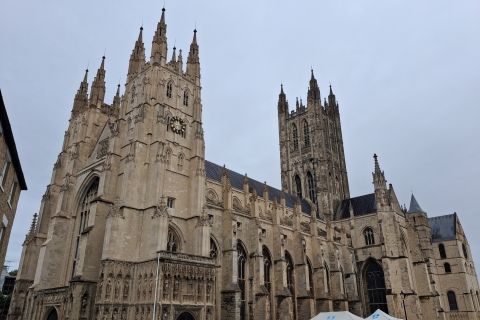
I recently spent a week in Kent.
For those who are not so familiar with British geography, Kent is the county south east of London that includes the coastline at Dover that faces France across the English channel.
There’s a lot of history in Kent. Centuries of battles, castles, invasions, intrigues, politics and scandals.
Perhaps the most striking feature of Kentish history is Canterbury cathedral.

Canterbury has always been the heart of Christianity in England. St Augustine established a church at Canterbury in 597 AD, and for nearly a thousand years people worshipped there under the authority of Rome.
But, things changed in 1534.
Henry VIII declared himself head of the church in England, and broke with Rome.
At Canterbury, Thomas Cranmer was installed as Archbishop, managed the transition towards what would become Anglicanism, and annulled Henry’s marriage to Catherine of Aragon against the ruling of the Pope.
And it was all because of limerence.
Anne Boleyn, LO
Most people know the story of Henry VIII and Anne Boleyn. At school, English kids are taught a rhyme of what fate befell Henry’s six wives:
Divorced, beheaded, died; divorced, beheaded, survived.
Anne was the first “beheaded”.
The ancestral seat of the Boleyn family is also in Kent. It’s called Hever Castle.
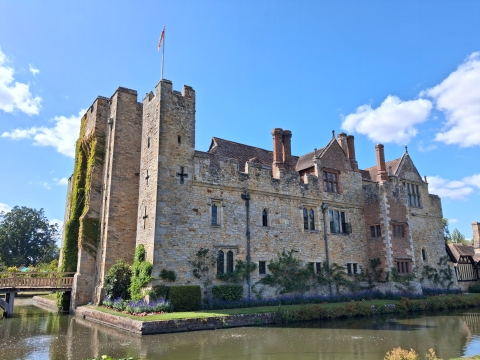
The castle contains a treasure-trove of information about Anne and Henry and the history of their torrid love affair.
Looked at with the practiced (jaded?) eye of a limerence obsessive, here’s the quick summary:
- Anne was described as being not especially beautiful in a classic sense, but elegant, alluring, and with dark, bewitching eyes. Perfect glimmer trigger.
- She stood out from her peers because of her dark hair, eyes and olive skin, and her wit and charisma. She was Special.
- Henry quickly became besotted, and was already at a point of frustration about not having a male heir with his first wife Catherine. Barriers intensify limerence.
- Anne made her interest in Henry clear, but also refused to become his mistress. She gave lots of hope, but there was built in uncertainty: Henry was married, his queen was popular, and the Pope was unwilling to annul his marriage. Barriers, uncertainty and hope.
- Henry constructed an elaborate explanation for why God had not granted him a son, because his marriage with sinful (he had sought special dispensation from Rome to marry his late brother’s widow, which is frowned upon due to a passage in Leviticus). Rationalisation.
- Henry was so consumed by desire for Anne that he chose to literally destroy the religious foundations of the Church in England rather than accept the Pope’s refusal to grant an annulment.
Accordingly, Henry and his enablers annulled the marriage to Catherine despite the Pope’s objection, allowed him to marry Anne in secret, and then announced the changes in government of religious life in the country.
The history of England was changed irrevocably.
Lots of people died as a consequence.
Including, of course, Anne, who also failed to provide Henry with a living male heir, and once the limerence passed, had to deal with a man who could see that he had thrown his country into turmoil over an infatuation.
Predictably, Henry did not use this as a moment for reflection and self-examination.
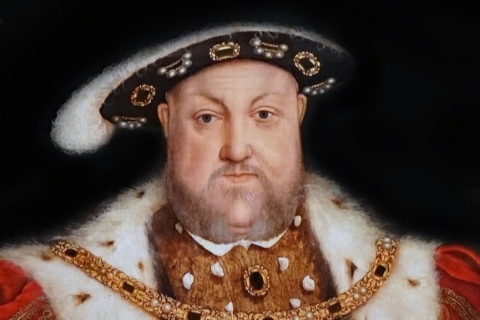
He decided that Anne must have used witchcraft on him, a belief eagerly affirmed by many of Anne’s enemies in the court. She was accused on many foul and treasonous acts and put to death after her marriage to Henry was also annulled.
He went on to try another four times to marry and produce a male heir who survived. He failed, but fate is not without a sense of irony, and it ultimately turned out that Anne’s only surviving child, Elizabeth, would become one of our most consequential and longest-serving monarchs.
He’s now a man remembered by history for his intemperance, and inability to resist his destructive passions.
Was this really limerence?
Obviously, there is a big old fog of propaganda around this story. As fortunes shifted back and forth through time, the dominant factions in the English establishment embellished, misrepresented, or outright invented details to help their case.
Inventions such as Anne having physical deformities, practicing witchcraft, sleeping with her brother, and so on.
One curiosity I learned on visiting Hever castle is that we don’t actually have any real idea what Anne looked like. Most of the famous portraits of her were painted many years after her death, barely resemble each other, and many were only validated as being Anne by modern art historians.
Henry ordered a purge of all portraits after her execution, and many noble families (including the Boleyns and Howards) destroyed their own paintings of the late queen for fear of Henry’s wrath.
The portraits we have are mostly from the reign of her daughter, Elizabeth I, and are strikingly similar to Elizabeth’s own physiognomy.
But, other artefacts did survive.
Some of Henry’s letters to Anne still exist, and were described as being more like the needy ramblings of a lovesick schoolboy than the words of a King who ruled one of the major powers of Europe.
He even ended one with a sketch of “AB” drawn within a heart.
The intensity of his infatuation is also not in doubt. Many courtiers, councillors and diplomats commented on it. It was a source of bitter resentment that this unremarkable noble girl had so much more power over the king than her “betters”, and that her family was advanced so far and so fast as a consequence.
And there is the scale of both the almighty infatuation and an equally almighty devaluation after he had sated his desire and had time to repent of his choice. You can almost sense the shock at his own actions.
As recovering limerents have lamented all through history.
What on earth came over me?
So, to me, limerence is the obvious explanation for Henry’s irrational behaviour.
He also seemed to repeat the pattern again with Catherine Howard (Anne’s cousin), who met the same grisly “beheaded” fate once the infatuation passed.
His infatuation for Jane Seymour also had signs of limerence, although he seemed to revere her, and she died before the limerence could run its natural course.
He was a man of animal passions and greedy appetites.
It was always likely to end badly.
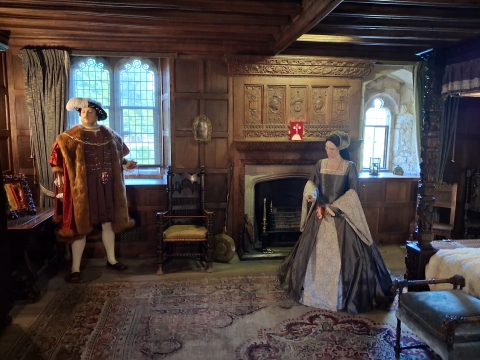
Too bad that LWL was not around in those days. Bad enough what limerence does to us; powerful people made so many other individuals pay for their poor decisions.
I do take a bit of comfort in knowing that I have tried not to inflict any pain on anyone as a result of my own limerence.
Thank you for explaining where Kent is. I have recently developed an interest in the Royal Family and have difficulty figuring out where places are.
Wondering if Harry is suffering from limerence?
Why would Harry be suffering from limerence? He found a partner and got married. I don’t think the fact he’s fallen out with his family has anything to do with limerence.
Our gutter press does pretty much accuse Meghan of witchcraft, though!
To Miss Cloud:
Meghan seems to have him bewitched; I was just wondering.
I don’t know much about the royal family, but from what little I’ve read … he seems easily manipulated and not overwhemingly bright.
To Marcia:
That’s what I have read, also. I wonder if Meghan is a bad influence on him.
Some of what you’re both saying might be true, but if I play devil’s advocate, I think it’s worth considering all this about him and the wider royal matters:
1. He was born into a destiny which, if we believe what he says, he decided that he didn’t want. Bits of his destiny would be attractive to some, but compared to his brother it is quite a raw deal, and the point is I don’t believe he wants it – he wants to make his own choices.
2. He lived through his mother being hounded to her death by paparazzi in a tunnel in France when he was still a child … with all the worries for the future that might create about him and his loved ones. He saw some of the effect on his father, of the royal circle forbidding him to marry his first choice, first time round.
3. The royals (as far as I understand it) and the British Press (beyond doubt) abhor his choice of wife in Meghan. The British press never gave them a chance. There are undertones – at best classist and at worst racist – as to why she is so disliked in those circles.
In those positions, wouldn’t anyone be tempted to run a mile?
Their wish was to escape the almost impossible situation they were in as a couple if he stayed as a royal.
Having said that, I do find all their Oprah interview / fly on the wall documentary type stuff a bit unsavoury. I think if they wanted to run from the limelight, they should just try and live more quietly now.
To LaR:
All good points. However, they’ve just moved back to the UK. So if it was so awful, why did they go back?
I am told that Harry has visa problems in the US, I don’t know if that’s true. I have also heard that they are out of money. They are wildly unpopular and most of their income sources have dried up.
If that’s true, the Bank of Pa must be looking pretty good.
Norma,
“If that’s true, the Bank of Pa must be looking pretty good.”
Good comeback – I had a chuckle at that.
Let’s see what happens. I’d take a bet that they can’t last as a couple for any more than two years living in the UK. The media and about half the population will make it unbearable. So either they will end up moving somewhere else, or he will eventually return to his destiny without her.
To LaR:
I wouldn’t make any bets on them. From what I understand, they are erratic and change their minds often.
I wouldn’t be broken-hearted if they got divorced. I was thrilled for them at first, but the more I learned about Meghan, the more alarmed I became. I believe that Harry is completely dependent on her.
Harry clearly has no job skills and needs guidance. Being brought up the way he was is a handicap to surviving in the regular world.
“Harry clearly has no job skills” – I nearly spat out my tea! He served his country (my country) as a soldier in a war zone.
Back to the original comment about limerence, it depends on whether you define limerence as the normal early stages of love, or as the hurt when those initial feelings are not able to be resolved, either through the love being unrequited, or unavailable, or the partner being bad for you. In the case of Meghan, as far as I know, they met, fell in love, got married and are raising a family. There’s no reason to think that it’s “gone wrong”.
Yes, his relationship with the rest of his family has broken down, but that’s not so unusual, and it’s a separate matter. Given the strange set of circumstances they all live in as royals, it’s not that surprising that rifts happen.
I find them super cringe. Nothing worse than a bunch of very privileged people with no actual talent or contribution complaining.
That being said, if I were to guess … they’ll end up divorced. They’re going to go back to England and he’ll be brought back into the family, who may give him some perspective on her. And at the end of the day, the family will close ranks. It’s what it does.
I’m surprised she’s allowing the move back to England. She’s seems more of a strategist than that.
“He served his country (my country) as a soldier in a war zone.”
Exactly, Cloud. And he didn’t have to / wasn’t (traditionally speaking) meant to – he did that because he wanted to try doing something other than ‘being a royal’.
I’d like to know why people – Americans especially – are so down on them, particularly Meghan. In the UK, it’s often because of classist attitudes (“she’s not good enough for him”) and the perception that she took him away from his family and destiny (that would really matter to about half of the country; the other half would broadly support them). But for those who don’t come from the UK, if you don’t care about the royal family as much/at all, them what is it about Meghan or them as a couple that gets people lit?
If they’re happy, as far as I’m concerned, more power to them.
The royal family doesn’t get me lit. I’m not that invested in the topic. But I do find Megan and Harry’s “woe is me/we’ve been mistreated” narrative getting tiresome.
Also, I don’t understand why anyone would want their tax money supporting the monarchy. The royal family doesn’t contribute anything to the world (artistically, scientifically, etc.); they have no political power; they aren’t particularly interesting or charismatic. Or even beautiful. Of all the reasons people are exalted or given attention, I’m not seeing any of those boxes checked with any of them.
Speaking only for myself, I dislike Meghan because she is arrogant and insincere. I worry that British people think that all Americans are like her. She has been caught out in many lies, and I don’t believe a word she says. Multiple former staffers claim she is a bully.
The Oprah interview was littered with falsehoods.
It’s true that Harry served in the military. But I don’t see a way where he could turn anything he learned there into a marketable skill. Better to be part of the Royal Family and to be guided by them.
He is rudderless on his own. He was very unhappy here.
I did want to make one additional point. I was interested in the Harkles’ move to California and have followed their exploits with curiosity.
They had a deal with Spotify which fell apart after a short time because, according to Bill Simmons, head of strategy, they are talentless and he called them “f*cking grifters.” None of their Netflix projects worked out, either, other than their original documentary. It seems they have nothing to sell but their grievance against the Royal Family, and that has gotten old.
So it may be true that Harry served in the military, but nothing he learned there has helped him to earn a living in the United States.
This is to Marcia:
Sorry, I really should collect my thoughts better.
I have heard that the Royal Family is a good value for taxpayers because it contributes to tourism. I don’t know if that’s true, but it seems like a plausible argument. Also, I have heard that the actual cost per capita is negligible.
I don’t really have an opinion one way or the other, although I would cringe if I was told that I had to curtsy to someone just because of an accident of birth.
Norma,
I don’t really know a lot about Meghan because our media are so set against her that I couldn’t rely on anything I read anyway.
What you said about curtsies due to an accident of birth could cut to the chase of what Harry feels – he doesn’t want to be that person. He has tried to go his own way instead. I find it sad if he has got lost along the way. But if you’re saying he’s better off back inside the Royal Family following their guidance … that could just turn him back into curtsy man again.
I wish there was a better way. I hoped it would work out OK for them in the US, but the fact they’re moving back to England suggests it didn’t.
“They had a deal with Spotify which fell apart after a short time because, according to Bill Simmons, head of strategy, they are talentless and he called them “f*cking grifters.” None of their Netflix projects worked out, either, other than their original documentary. ”
A lot aging Hollywood actresses, when the parts dry up, go into some kind of lifestyle business. And Megan is no exception, (“Aging,” by Hollywood standards, is … what? late 30s/ early 40s.) But it’s presumptuous for them to assume they’ll be any good at it. No matter what you think of Martha Stewart … she had years of experience before being given her own TV show. She was in the trenches, years earlier, with her own local catering business.
“It seems they have nothing to sell but their grievance against the Royal Family, and that has gotten old.”
That’s what I meant. Yes. They’re going to need to trot out a new narrative because we’ve heard that one for several years now. Now, do I believe it’s entirely possible she was discriminated against by the royal family due to her race? Yes.
To Marcia:
It’s true that Meghan could have been discriminated against because of being bi-racial, but I have also heard the opposite. That they were DELIGHTED she was bi-racial because it was a great way to modernize the Monarchy.
Now, I fear that Meghan has tried to use her race as a cudgel. Any time anyone criticizes her, she claims it’s because of racism.
I personally think her claims are either exaggerated or unwarranted altogether.
“I personally think her claims are either exaggerated or unwarranted altogether.”
It’s possible. I always side-eye these celebrities who claim they are being hounded by the press and can’t have privacy.
There have been famous people who’ve, for example, gotten married and even started families without anyone finding out. If they wanted to be low key, they could.
Harry and Megan want the attention and drama.
To Marcia:
South Park skewered them with a “Worldwide Privacy Tour” where Harry and Meghan traveled around the world with lots of fanfare, carrying signs that said “Leave Us Alone!” and “Stop Looking At Us!”
It was pretty funny.
Norma D:
“South Park skewered them with a “Worldwide Privacy Tour” where Harry and Meghan traveled around the world with lots of fanfare, carrying signs that said “Leave Us Alone!” and “Stop Looking At Us!””
Reminds me of JFK, Jr.
Please, paparazzi, leave me alone, let me have my privacy … as I walk around outside, shirtless, in short shorts. 😉
To Marcia:
Well, at least Harry doesn’t have to worry about being too sexy for his shirt.
To ND:
“Well, at least Harry doesn’t have to worry about being too sexy for his shirt.”
Lol. No, that’s something Harry does not need to worry about. 🙂
To be honest … JFK, Jr. … obviously good-looking … but this was a man who had been famous and fawned over his whole life … but he still seemed to need a LOT of attention. That’s a turn off.
To Marcia:
JFK Jr. and Caroline–an awful tragedy that didn’t need to happen. At least his mother was not here to see it.
Having said that, I still maintain that Prince Harry has no job skills and is probably better off in England. I think he was miserable here and needs a more structured life.
“Well, at least Harry doesn’t have to worry about being too sexy for his shirt.”
https://www.youtube.com/watch?v=tXpdUpIOA6k
Lots of women have shared this clip in admiration…
Cloud:
He’s a nice-enough-looking guy but I wouldn’t describe him as handsome.
He wouldn’t get as much attention from women if he wasn’t a prince.
Hi Cloud,
Nice to hear from you! How have you been?
It’s also nice to see you re-centering the discourse to what is really important. I will always respect those who have served their nation, irrespective of their other talents or appearance.
Hello Catcyclist! I’m ok thanks. I’m over the worst of limerence and life and relationship continues to improve, but I still check here and read the blog each week to remind me to keep on my guard. I hope you’re ok.
I was going to say Greensleeves was written by Henry about Anne, but a quick Google says that’s a myth.
But yeah, it’s darkly funny that with all the destruction caused by his obsession with producing a male heir, and his limerence, he DID produce a great monarch—but she was a daughter. I also got the impression that the one marriage that “worked” was not a love-match. And such a shame for Anne, who apparently tried to do things “right,” and still lost her head. She was at the mercy of a powerful man with destructive passions.
To LaR:
I think if Harry were able to make a living as a film producer or a public speaker, I think he’d be happier. However, he appears to be lacking in those skills, and frankly, he wasn’t trained to be able to support himself.
From what I understand, he was at loose ends in California for much of the time and of course he felt purpose-less.
I hate to see him go back and become “curtsy-man” again, but it’s better than feeling like he has nothing whatsoever to offer. He has an amiable personality and he’s likeable. There has to be something he can do.
He was a helicopter pilot in the military. He and Megan could start a helicopter celebrity tour company.
To L.E.:
That is a FABULOUS idea. I also think they should do their own reality show.
Thanks Dr. L, I have since gone into full research mode on Henry VIII and his 6 wives ! A reminder of how history is so fascinating.
I agree with Serial that the best thing that came from his limerence was the birth and subsequent long reign of Elizabeth I.
When Henry died he chose to be buried next to Jane Seymour who died soon after the birth of his much awaited male heir.
He probably did not have limerence for Jane, but he must have been heartbroken over her untimely death.
Maybe she would have fallen from his favor in time had she lived or been his lasting beloved wife.
Jane and Anne were cousins, so their family lost a lot to the King’s lust !
At least the happy ending in this story is that the poaching woman was beheaded, unlike in the real world where they’re patted on the back and validated for their efforts.
Um, what? Dr L, I think we have a troll here
🦇 📕, why do you think there is a troll here?
In COO and some other cultures, “poaching women” would be either stoned into a river or sent to an exile.
Because the idea of murdering people for such things should never be considered acceptable. I’ve seen some of this online, apparently from the manosphere, and find it horrifying. Being let off the hook for “crimes of passion” is a part of the past that should not come back into the present.
I thought the case here is referred to Henry VIII time.
Yes, killing or sever punishment (physical harms or exile) of “crime of passion” should never be allowed. But in some totaliarian countries (the current North Korea and past China) or cultures (Middle East), some severe forms of pubnishment is still carried on by the system, unfortunately.
But should the other extreme — “glorifying”, enabling unavailable LE passion/addiction, w/o EA/PA, at cost of damages/pains to iSO + family, be promoted or ignored?
I think maybe in the classic sense of troll. Trying to provoke a reaction. Everyone is free to choose if and how they want to react.
I did think of asking Shaun for an example of a “poaching woman” (really not sure it was Anne doing the poaching of a king in this scenario, but whatever) being patted on the back, but then decided not to bother.
Oops. Except I can of have now.
I agree with Serial, the comment crosses a line.
Anne was actually pursued by the King of England, and she refused to be his mistress. If she had refused to be his wife, she may have met a terrible end even sooner.
I know not of a poaching woman who is held in regard….maybe Jolene, but only because we love Dolly Partons song !
RIP Dolly x
“I know not of a poaching woman who is held in regard…”
You (impersonal) know how much those, who are related to those “parching women/men” in reality have suffered? — their spouse (if any) are betrayed, children ignored or/and abused, friends forgotten, professional or/and domestic duties neglected… in addition to her/his own mental pains — chasing addictive high and temporary gratification, either by selfishness, weak will or/and chosen addiction.
Due to my Narc mother’s recurring “poaching” (the attempt even made to my ex-boyfriends), my father and I ended up going exile with her to a literally barren/savage village, living with well-water, oil lamp, paper-window, mud-bed, hand-farming tools, wandering wolves howling between villages, inextinguishable flea and lice… for over 2 years (scratched and infected scars are still visible on my body). I had to live in a place “two hundred year ago” displayed in your Natural History museum…. 🙄 (thus I can survive a realistic apocalypse!)
Now, I have to physically and mentally “mother” Mom and am bound to where I am (except for a short trip here or there). Tell me about that whimsical, aloof Fate Lady!
Please understand that my attitude towards those “poaching” limerents, both males and females, can be biased.… Having/falling in LE and any/all emotions is normal and human; but ACT ON “poaching” unavailable LO with SO/family (on either/or both sides) is unconscientious and condemnable.
Edit:
“— chasing addictive high and temporary gratification, either by selfishness, weak will or/and chosen addiction, or/and soon or later, ignored, forgotten or “abandoned” by unavailable, uncaring, egotistical, or/and wanton LO(s).”
Admit: In my XLE (prior to landing in LwL), I was attempted by the temptation twice; but clearly foreseeing its dire ending, I didn’t cross line with the other side’s “green light” on….
I feel proud that the Oath has never been knowingly broken since it was made to Myself decades ago….
Tennov calls him a “flagrant limerent” (p. 157)
Also
https://time.com/archive/6698242/sexes-lets-fall-in-limerence/
https://web.archive.org/web/20201102174532/https://www.nytimes.com/1977/09/16/archives/love-and-limerence.html
Thanks David for sharing. The “Dear Ralph” article was apt and entertaining.
The citation from his love letter number 2 out of 4; page 27 ! 😂
Commemorating 9/11.
Thanks!
My lawyer (a personal friend) came out of the 81st floor of #2 tower by stairs, 6 minutes before it’s down…
A close college classmate came out of the subway for work 12 minutes before it was sealed and then collapsed.
Me, working far away uptown listening to the radio in disbelief and unstoppable shakiness (for two days)…
Glad to hear that your friends got out in time.
I think a huge number of people were affected much as you were — “in disbelief”.
I was lucky to not have any close relatives, friends, or colleagues who were victims.
However, my LO from college had relatives perish in a much earlier terrorist attack, the June 1985 bombing in Canada. I had almost forgotten about that until yesterday.
Wow, did that sad event affect your LO’s mind/subconscious somehow? Did it affect your interaction with her?
You were lucky indeed!
It’s truly horrendous crime to have so many innocent people die in such a horrific manner: as my college classmate was running away from the tower (after getting out subway), his eyes could not be pulled away from seeing those people jumping down, he said he felt like “dreaming” in surrealism, then the airwave of the collapse smacked him on the cement ground…
He crushed at my place for the next 2 days in order to work/revive the computer network for a giant finance firm down there & around the world.
Later, he got divorced with a small kid and then returned to his COO and is still working there.
The lawyer’s office was one flat below the hit floor, and there was an aging person slowing walking down ahead him while descending the dark, smoke-filled stairs. He still made it! He’s the luckiest person I’ve ever known! — steadily and happily married with three children.